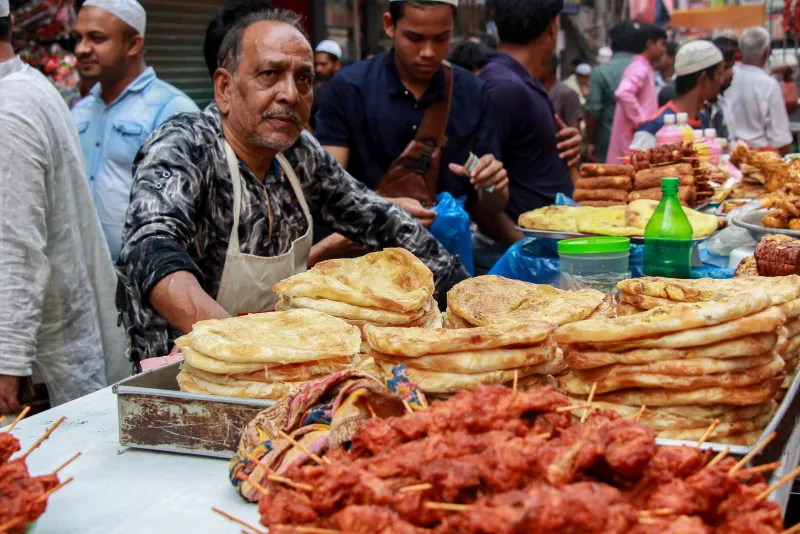
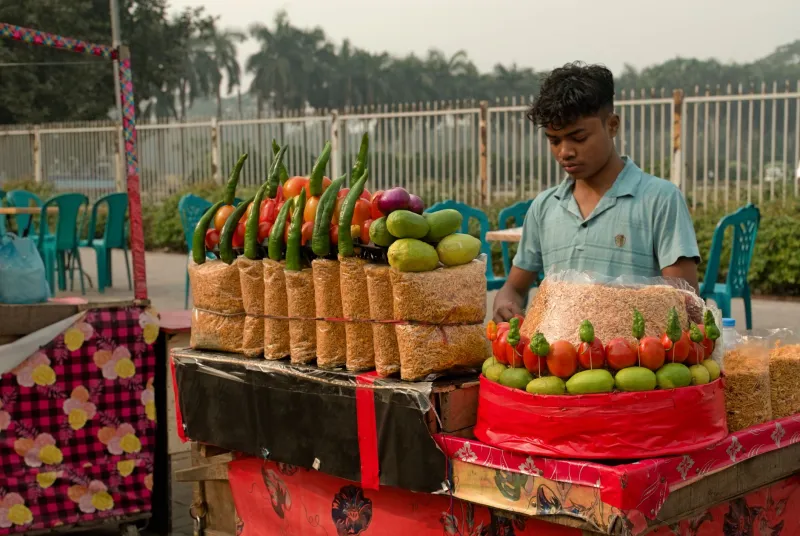
I Tipped Double At Five Dhaka Food Carts And Broke The Social Contract In Five Languages
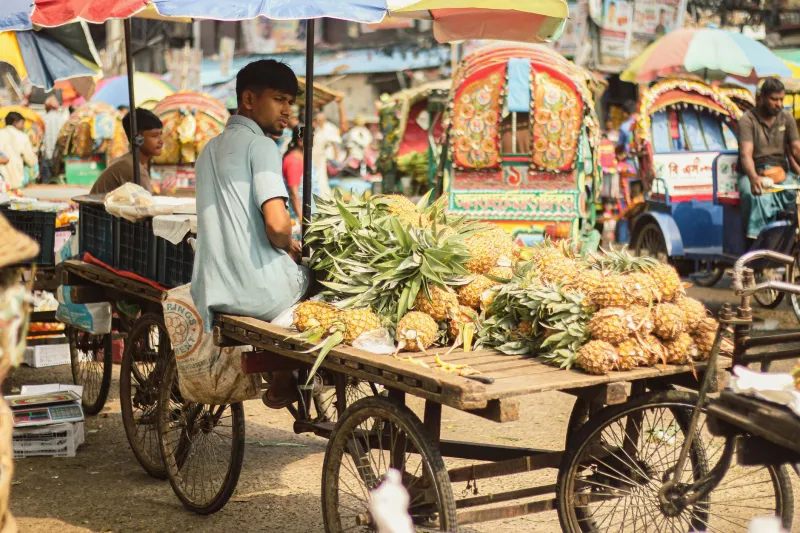
In New York, leaving a 25% tip gets you a nod and a swift exit from the table. In Dhaka, I recently discovered that leaving a 100% tip gets you something far more complicated: a full-blown negotiation, a health inspection of your mental state, and in one memorable case, an offer of free extra cucumber.
I know this because I ran an experiment. For one week, I ate at five different street food carts across Dhaka, and at each one, I did the unthinkable — I tipped double. A 70-taka meal, a 140-taka payment. "Keep the change," I said, in the confident tone of someone who has watched too many American movies.
What followed was less a transaction and more an improvised theater production.
Act One: The Refusal Stage
The first cart was a fuchka stand near TSC. The bill: 70 taka. I handed over a 200-taka note and waved off the change. The vendor, a man with the reflexes of a Formula 1 pit crew, was already counting out 130 taka before I finished my sentence.
"No, no — keep it," I said.
He looked at the money. Then at me. Then back at the money, as if it might be counterfeit. "Bhai, this is too much."
Here's the thing that no American tipping guide prepares you for: in Dhaka's street food economy, the tip isn't a social obligation — it's a category error. The transaction is the hospitality. The vendor has already decided to give you extra tamarind water before you asked. He's already remembered you like it spicy. The idea of paying extra for service that was never priced in feels, to him, like being handed a bill at your own mother's house.
I insisted. He resisted. We went three rounds. Eventually, he kept exactly 20 extra taka and returned 110, presumably to preserve the moral integrity of his cart.
The Math Doesn't Math — And That's the Point
Let's put this in American terms, because I know someone in Ohio is reading this on a lunch break. Imagine your $15 salad. Now imagine tipping $15 more. Now imagine the cashier refusing, chasing you into the parking lot, and forcing $11 back into your pocket.
That's roughly the emotional journey of a Dhaka street vendor receiving a 100% tip.
In the US, tipping culture has metastasized into something between a tax and a hostage situation. The tablet flips around. The screen asks for 18%, 22%, or 28% — for pouring your own coffee. The baseline expectation has inflated so thoroughly that a standard tip now costs more than the entire meal at any cart I visited. My most expensive Dhaka meal of the week: 70 taka. Roughly 60 cents. The tip screen at an American airport cafe regularly asks for more than that per coffee.
But the experiment taught me the deeper difference isn't the amount. It's the direction of the relationship.
By Cart Three, I Was Being Fed Against My Will
The jhalmuri wallah at Farmgate recognized me on day three. This was not a compliment to my memory — it was a strategic development. He'd accepted my strange double-tip from day one (after significant protest), and now he was compensating. Extra boiled egg. Extra mustard oil. A lemon wedge he carved with the precision of a jeweler.
Every subsequent visit, he tried to give me more food to offset the tip. He was, in effect, un-tipping me back. I had created an arms race of generosity, and I was losing.
By cart four — a chotpoti stand where I attempted the same maneuver — the vendor skipped the protest entirely and simply made my portion larger. The tip had been absorbed into a silent renegotiation of portion size. Nobody discussed it. Everybody understood. This, I realized, is how Dhaka street food actually works: not through line items and percentage prompts, but through a continuous, unspoken ledger of goodwill that both parties keep forever.
The Verdict: Who's Really Paying Whom?
Here's my honest, slightly uncomfortable conclusion: American tipping culture asks the customer to subsidize wages the employer won't pay, wrapped in the language of gratitude. It's a guilt engine with a receipt. Twenty-five percent isn't generosity anymore — it's the floor.
The Dhaka street cart runs on a completely different operating system. Prices are honest and low. Hospitality is baked in, not billed on. And when you try to tip extravagantly, the system pushes back — not because vendors don't want the money, but because the relationship isn't supposed to work that way. The 70-taka fuchka plate comes with the extra chutney and the remembered order included. You don't tip for that. You come back. That's the currency.
Did my five vendors all accept the tips? Two refused outright, two partially, one took it with the expression of a man accepting a strange but harmless blessing. Total extra taka spent across the week: about 400. Roughly $3.30 — less than a single standard tip on a mediocre dinner in Chicago.
The best value I got all week wasn't the food. It was watching a man in Mirpur refuse free money because his pride in a 70-taka plate of chotpoti was, apparently, not for sale.
Try that with your airport coffee.