I Tried to Rebuild Dhaka's 70-Taka Street Snacks in an American Kitchen. My Receipt Is a Crime Scene.
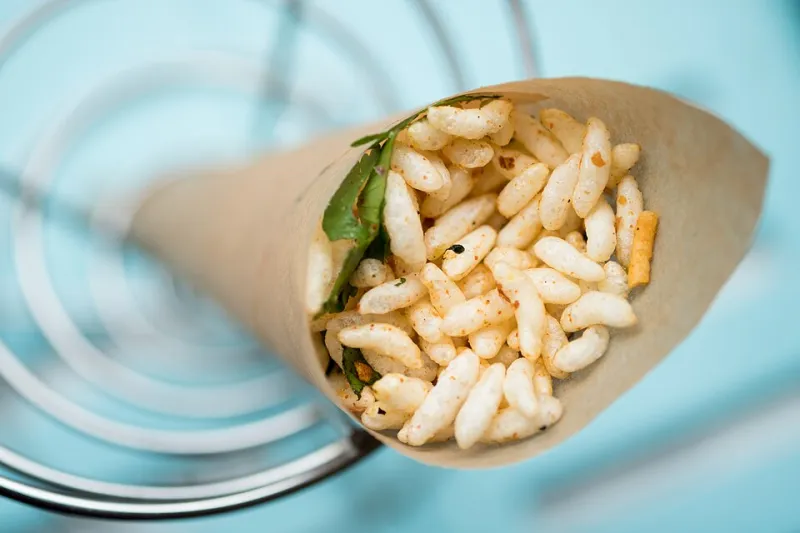
Photo: Erik Lundqvist erik_lundqvist, CC0, via Wikimedia Commons
There's a moment every homesick Bangladeshi in America eventually faces. It usually happens in aisle 7 of a Kroger, staring at a $6.99 bag of rice cakes and thinking, I could make jhalmuri right now.
I had that moment last Tuesday. Then I actually did it. I attempted to recreate three of Dhaka's greatest sub-70-taka hits — jhalmuri, chotpoti, and fuchka — using nothing but what I could buy at an American supermarket and one desperate detour to a South Asian grocery. What follows is part recipe guide, part financial horror story, and part love letter to the muri-wala back home who does all this for about sixty cents.
The Contenders: Three Snacks, Sixty Cents Each (In Theory)
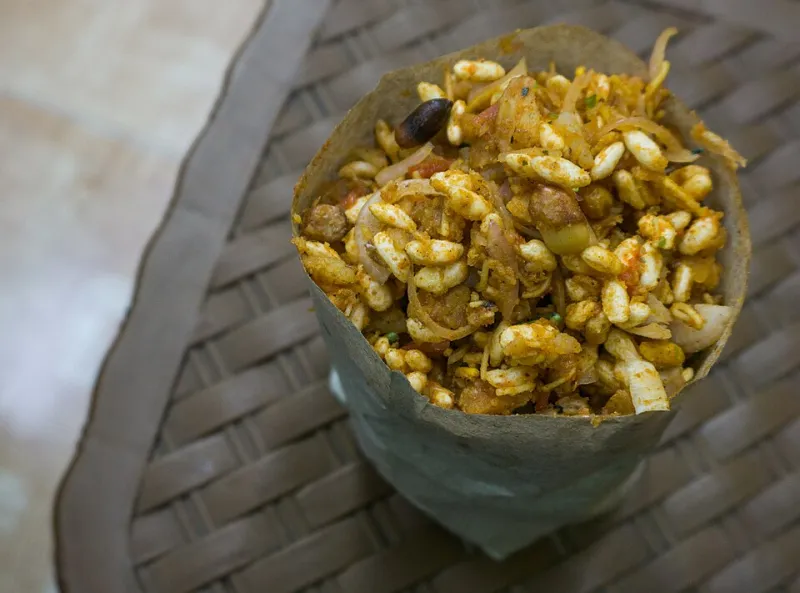
For the uninitiated: jhalmuri is puffed rice tossed with mustard oil, tamarind, chopped onion, chili, and whatever spices the vendor's wrist decides to add. Chotpoti is a warm, tangy chickpea-and-potato chaos topped with tamarind chutney and a hard-boiled egg. Fuchka (what North India calls pani puri) is that crispy hollow sphere you stuff with spiced potatoes and pour tamarind water into, ideally while standing up and sweating.
In Dhaka, each of these runs 20 to 70 taka. In Brooklyn, well. Keep reading.
The Receipt (Brace Yourself)
Here's the damage, itemized like a confession:
- Puffed rice (muri): $4.49 — and that was the good South Asian grocery price. The health-food store wanted $7 for "ancient grain puffs," which is the same thing with a marketing degree.
- Tamarind concentrate: $3.99
- Mustard oil: $5.99 (the label legally must say "for external use only," which tells you everything about American food regulation)
- Chickpeas, canned: $1.29
- Potatoes, two: $1.10
- One red onion: $0.89
- Roma tomatoes, two: $1.58
- Cilantro bunch: $1.49 (used one-fifth of it, rest died in the fridge with dignity)
- Green chilies: $2.29
- Tamarind chutney jar: $4.99
- Fuchka shells (store-bought, I'm not a monster): $3.49
- Chaat masala: $3.99
- One egg: $0.45
Total: $36.99. At an exchange rate of roughly 120 taka to the dollar, that's about 4,400 taka. In Dhaka, the same three snacks cost me maybe 150 taka combined. My Brooklyn kitchen version cost 29 times more.
But here's the twist the receipt doesn't show: those ingredients made eleven servings. Per serving, I landed at about $3.36 — which is still four dollars more than the entire Dhaka experience, but less than a sad airport salad. Progress, of a kind.
Recipe One: Jhalmuri, The Gateway Snack
The beauty of jhalmuri is that it's less a recipe than a vibe with a wrist motion.
- Take two cups of puffed rice in a bowl.
- Add half a diced red onion, one diced Roma tomato, a handful of chopped cilantro, and one minced green chili (two if you're performing masculinity).
- Add a teaspoon of tamarind concentrate, a splash of mustard oil, a pinch of chaat masala, and salt.
- Now the important part: toss it all with your hand, lifting and folding like the vendors do on the TSC footpath. A spoon works, but the muri goes stale faster and the universe notices.
- Eat immediately. Jhalmuri has a shelf life of about four minutes, which is why it's the perfect food — you can't hoard it, you can't save it, you can only be present with it.
American swap notes: No mustard oil? Use neutral oil plus a half-teaspoon of ground mustard. No tamarind concentrate? A squeeze of lime plus a teaspoon of brown sugar gets you shockingly close. Do NOT substitute Rice Krispies. I watched someone try it once. We don't speak anymore.
Recipe Two: Chotpoti, The Warm Hug
- Sauté one diced potato in oil until the edges brown. Add a drained can of chickpeas, a teaspoon of cumin, half a teaspoon of chili powder, and a cup of water. Simmer until it thickens into something spoonable and beautiful.
- Spoon into a bowl. Top with sliced hard-boiled egg, diced raw onion, chopped cilantro, and a generous zigzag of tamarind chutney.
- Sprinkle chaat masala like you're seasoning a grudge.
The American supermarket version is honestly fine here — canned chickpeas were the one place where convenience didn't betray me. Total cost per serving: about $1.80. In Dhaka: 40 taka. The gap narrows. Hope flickers.
Recipe Three: Fuchka, The Boss Fight
Store-bought shells are non-negotiable unless you have a weekend and unresolved ambition. Crack the top of each shell, stuff with the chotpoti potato-chickpea filling, add a sliver of egg and onion, then dunk the whole thing in tamarind water (tamarind concentrate, water, chaat masala, a pinch of salt, blended thin).
The entire fuchka goes in your mouth in one bite. This is law. Anyone who bites a fuchka in half should be gently but firmly redirected to a different country.
Cost per serving: about $2.60, mostly because the shells are imported and priced like jewelry.
The Verdict: Can the 70-Taka Spirit Survive?
Here's what my receipt can't capture. The jhalmuri cost me $3.36 a serving and still tasted good — genuinely, surprisingly good. The chotpoti made my roommate, who has never been east of Rome, ask for the recipe. The fuchka made me close my eyes and hear rickshaw bells.
So no, the 70-taka price point doesn't survive the American grocery supply chain. Nothing does. But the idea behind it — huge flavor, tiny money, food eaten standing up with your hands and your whole heart — absolutely does. For about the price of one fast-food combo meal, you can stock a kitchen that produces eleven servings of Dhaka street magic.
That's not a 70-taka deal. But it's the best exchange rate on happiness I've found in this zip code.
Got a Dhaka snack you've tried to recreate abroad? Tell us what broke first — your budget or your mustard oil. The comments are open and the chaat masala is waiting.