Diversify Into Jhalmuri: My Seven-Day Street Snack Portfolio Beat Wall Street (And It Wasn't Close)
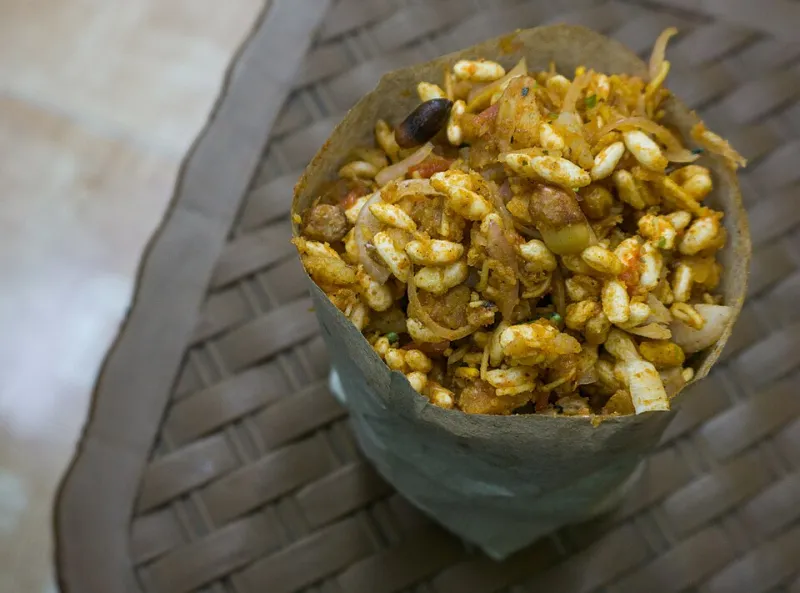
Photo: Sumit Surai, CC BY-SA 4.0, via Wikimedia Commons
Let me be honest about my financial situation: last quarter, my brokerage app sent me a notification that I had lost money, and then it charged me a fee for the privilege. Around the same time, I watched a Dhaka street vendor hand a man a heaping cone of jhalmuri, fresh, spicy, and alive with tamarind tang, for the price of roughly 45 American cents.
That's when it hit me. I don't have a portfolio problem. I have an asset allocation problem. My assets were just allocated to the wrong continent.
So I did what any red-blooded American raised on CNBC and gas station taquitos would do: I treated one week of my fancy coffee budget — a modest $12, or about 1,300 taka — as seed capital, and I invested it entirely in the Dhaka street snack market. I tracked every position daily, calculated my "returns" in happiness per taka, and diversified like my life depended on it.
Here's the prospectus.
The Blue Chip: Jhalmuri (Ticker: MURI)
Every serious portfolio needs a bedrock holding — the Coca-Cola of the portfolio, the thing you can recommend to your conservative uncle without flinching. In the Dhaka snack market, that's jhalmuri.
Puffed rice, mustard oil, chopped onions, green chili, a splash of tamarind water, all shaken together in a steel can with the rhythm of a maraca solo. It costs 30 to 40 taka. It has never once in recorded history been out of stock, overpriced, or disappointing. Its volatility is basically zero. Its dividend — paid out in chili-induced euphoria — compounds every single time.
I invested 240 taka in jhalmuri over the week. Return on investment: six solid lunches, zero regrets, and one vendor who now greets me with extra peanuts because he recognizes my face. Try getting that customer loyalty from a $7 latte. Starbucks doesn't even remember your name, and that's literally the whole pitch.
The Growth Stock: Samosa (Ticker: SOMU)
Samosas are the tech stocks of the street food exchange. Higher risk, higher reward, wildly dependent on timing.
Buy at 4:45 PM — right as the evening batch hits the oil — and you've caught the IPO of the day: blistering, shattering crust, potato filling steaming like a fresh earnings report. Buy at 6:30 PM, when they've been sitting under a heat lamp of pure ambient humidity, and you've bought the top. The asset has depreciated. You will feel it.
I allocated 210 taka across the week and learned to read the market. The successful positions cost about 20 taka each and delivered a satisfaction yield I'd value at several dollars. The one bad position — a sad, lukewarm somu purchased during a lull — taught me the same lesson every day trader learns: time in the market matters, but timing the fryer matters more.
The High-Yield Holiday Play: Pithe (Ticker: PITH)
Here's where my portfolio got spicy. Pithe — the sweet winter rice cakes, sometimes stuffed with date molasses and coconut — are strictly seasonal. They show up in the winter months like quarterly earnings: briefly, gloriously, and then gone.
Seasonal assets are where fortunes are made. I put 150 taka into a plate of bhapa pithe from a woman near the market who has been running this operation longer than the Fed has existed. Cost per unit: about 25 taka. Taste yield: the kind of warm, caramel-sweet payoff that American bakeries would slap a $9 price tag on, add a drizzle, and call "deconstructed."
The catch? You can't hold pithe year-round. This is a holiday play. Rotate your capital when the season ends or watch your returns evaporate. I reinvested my remaining pithe allocation into chotpoti and never looked back.
The Speculative Position: Mystery Fried Thing (Ticker: ??)
Every portfolio needs a small allocation to high-risk, high-mystery assets. Mine was 80 taka of unidentifiable fried items from a cart whose menu was communicated entirely through pointing and confidence.
Was it a peyaju? An egg chop? A beef cutlet wearing a disguise? Unclear. Delicious: confirmed. This is the Dogecoin position of the snack portfolio — you don't invest for fundamentals, you invest for the ride. My 80 taka returned three surprises, one of which I'm still thinking about.
The Benchmark: What My Coffee Money Did in America
For comparison's sake, let's run the same $12 through the American economy.
- One fancy latte: $7. Gone. Zero asset created. No dividend. The cup does not even have a lid that works.
- One "artisanal" bakery croissant: $6. Also gone. Also fine, but fine at a 4x markup.
Total American portfolio value after one week: a vague sense of having participated in capitalism.
Total Dhaka street portfolio value after one week: roughly 20 separate snack positions, six full meals, one seasonal delicacy, an unexpected fried mystery, a vendor friendship, and 640 taka of change still sitting in my pocket earning nothing but respect.
The Annual Report
I'm not saying you should move your 401(k) into puffed rice. I'm saying that on a per-taka basis, the Dhaka street snack market is the most efficient happiness machine ever devised, and the entry fee is a rounding error.
The real lesson for my fellow Americans: your dollar isn't weak. It's just been hanging out at the wrong counter. Bring it to Dhaka, let it stretch its legs, and watch it compound into a week of eating that no $7 latte will ever match.
Diversify, friends. And when in doubt — jhalmuri is the blue chip. It always has been.
Past performance is not indicative of future results. Pithe availability is seasonal. The mystery fried thing remains unidentified and undefeated.