Tuition Is One Snack: The Unaccredited Culinary Master's Degrees Hiding Behind Dhaka's Street Carts
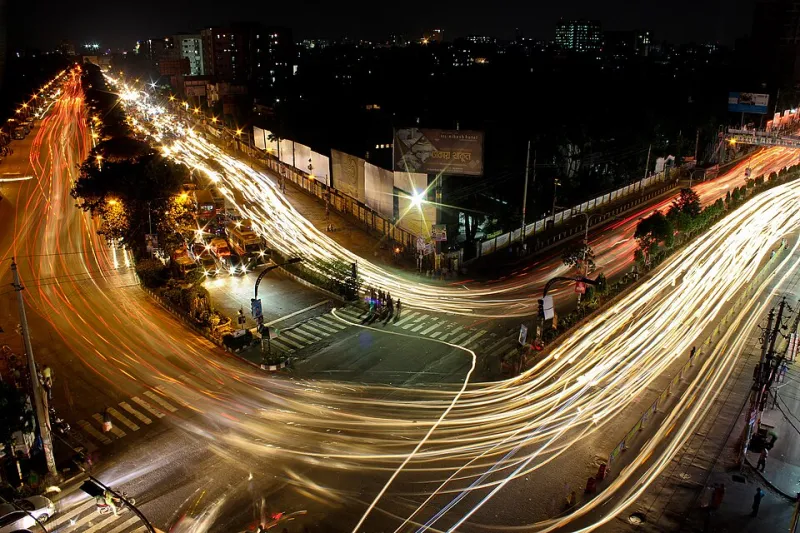
Photo: Sajeeb Ahmed Photography, CC BY 3.0, via Wikimedia Commons
The Most Expensive Education I Almost Bought
A few years back, I very nearly enrolled in a weekend culinary fundamentals course in the US. The brochure was glossy. The tuition was not: $2,400 for six Saturdays, plus a knife kit that cost extra because apparently blades are sold separately from dreams.
I didn't enroll. Instead, I moved to Dhaka, and over the following months I spent an amount of money that would embarrass a vending machine and got, conservatively, a better food education. Not from a school. From the street.
Here is my unofficial transcript. Every class cost exactly one snack.
Class One: Jhalmuri Cart, Knife Work — Tuition: 40 Taka
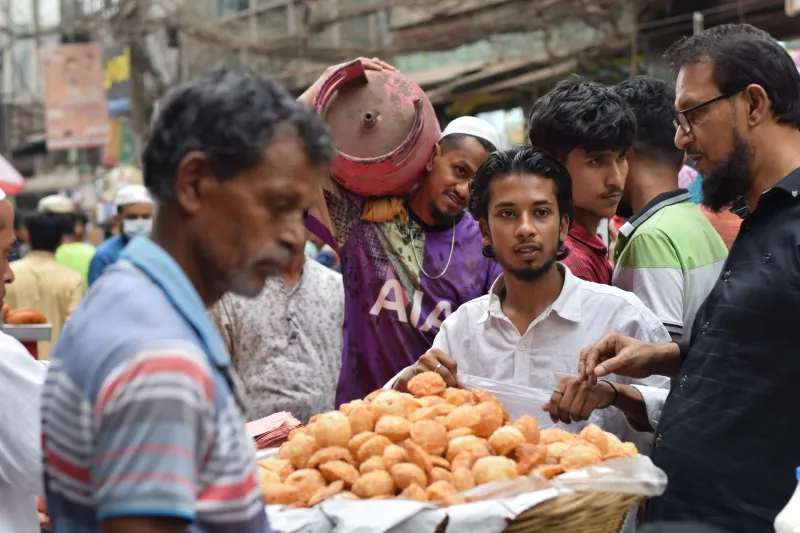
The jhalmuri guy near my lane in Dhaka processes more produce in an hour than I did in a year of home cooking. Puffed rice, cucumber, tomato, raw mango, green chili, cilantro — all of it chopped to a uniform fine dice with a bonti, the curved blade fixed to the ground that every Bangladeshi kitchen treats as furniture.
Here's what stunned me: every piece of cucumber is the same size. Every cube of tomato, the same. Not because anyone measured — because uniform cuts mean uniform flavor distribution in every paper cone he sells. When you eat jhalmuri, no bite is a dud bite. That's not luck. That's knife discipline.
The Western equivalent? A basic knife skills intensive runs about $150 in most American cities, and half the class is spent learning the claw grip while the instructor circles like a nervous shark. Total cost of my lesson: 40 taka — roughly 35 cents — plus the unspoken enrollment fee of standing there long enough that the vendor started narrating his technique to me out of a mixture of pride and pity.
Class Two: The Chotpoti Stand, Flavor Layering — Tuition: 50 Taka
Chotpoti looks simple: chickpeas, potatoes, tamarind, spices, an egg if you're living large. It is not simple. Watch the good carts and you'll see actual architecture happening in the bowl.
The vendor builds in layers with the deliberateness of a pastry chef. Spiced chickpeas first. Then potatoes. Then the tamarind-tamarind-sour engine — that dark, tangy hit that makes your molars sing. Then the heat layer, the crunchy layer, the cool egg on top. Each element lands on a different part of the palate at a different moment. Sour, salt, fat, crunch, burn — sequenced, not dumped.
I once watched a famous American YouTube chef — the kind with a $12 million kitchen studio — spend a 22-minute video explaining "flavor layering" with graphics and B-roll. The chotpoti guy taught me the same principle in the time it took to spoon the tamarind water. And his version came with a free second helping when I asked questions.
Tuition: 50 taka, about 45 cents. The YouTube course was free too, I'll admit, but it didn't feed me.
Class Three: The Puri Fryer, Portion Economics — Tuition: 20 Taka
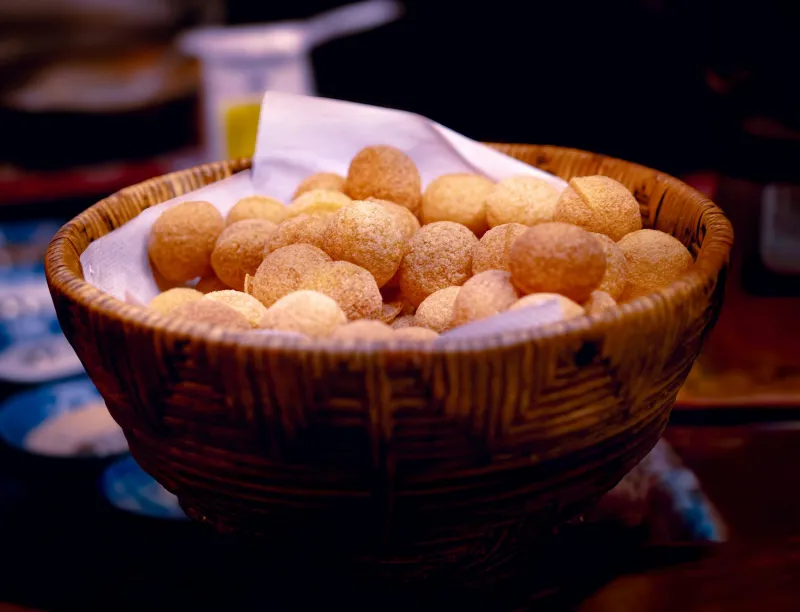
This is the graduate seminar. The puri walla frying golf-ball-sized puffed breads by the dozen understands unit economics better than half the MBAs I've met.
Watch him work. Dough is portioned by eye to the gram — not because he's a wizard, but because waste is death when your entire price point is 20 taka. Oil temperature is managed by sound and bubble behavior, no thermometer, no digital probe, no "insert probe until it reads 375°F." His ears are the thermometer, and his ears have never once been wrong in front of me.
Then there's the pricing genius: a puri costs almost nothing to make, sells for almost nothing, and the margin lives in volume and rhythm. He never stops moving. There's no idle batch, no waste, no dead time. A US restaurant consultant would charge $5,000 to call this "throughput optimization."
My tuition for the full seminar: 20 taka, about 18 cents, paid in four installments of one puri each. Best ROI in my financial history, and I once bought Apple stock in 2009.
The Degree Nobody Can Sell You
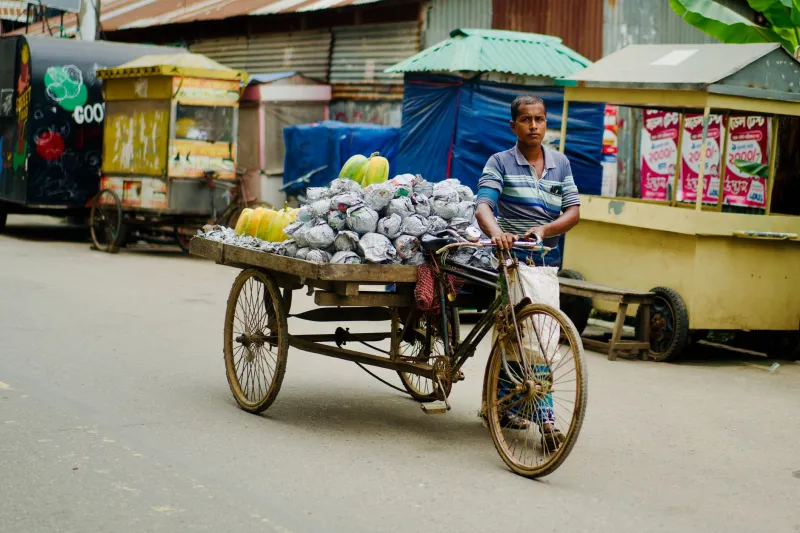
Here's the thing that American food media gets slightly wrong when it romanticizes street food: it's not charming because it's cheap. It's impressive because it's skilled. These vendors are running high-volume, low-margin, precision-cooking operations in 95-degree heat with no staff, no equipment budget, and no margin for error. Every one of them is a chef, a cost accountant, and an operations manager rolled into one sweaty, magnificent package.
A Western culinary school will teach you this stuff too — for the price of a small car, over four semesters, with a lot of talk about "mise en place." Dhaka's streets teach it the way it was originally learned everywhere: by watching someone who's done it ten thousand times, then doing it badly until you don't.
Total education cost across all three classes: 110 taka. About a dollar. I got change back from the money I once spent on a single cookbook I never finished.
The diploma is informal — a nod of respect from a jhalmuri cart when your dice finally comes out even. But unlike a $30,000 certificate, this one came with lunch.