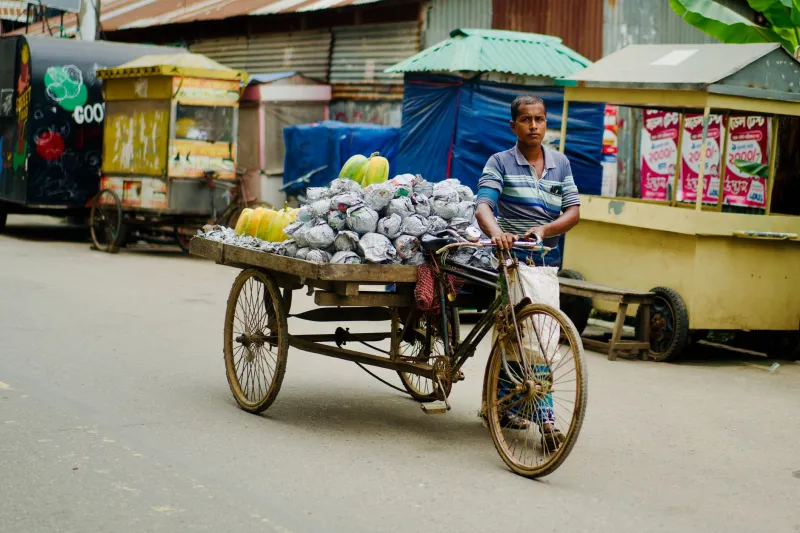
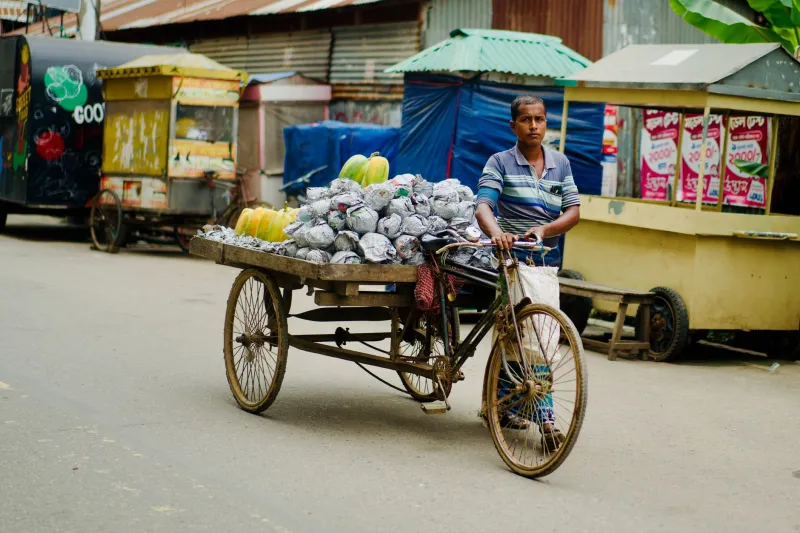
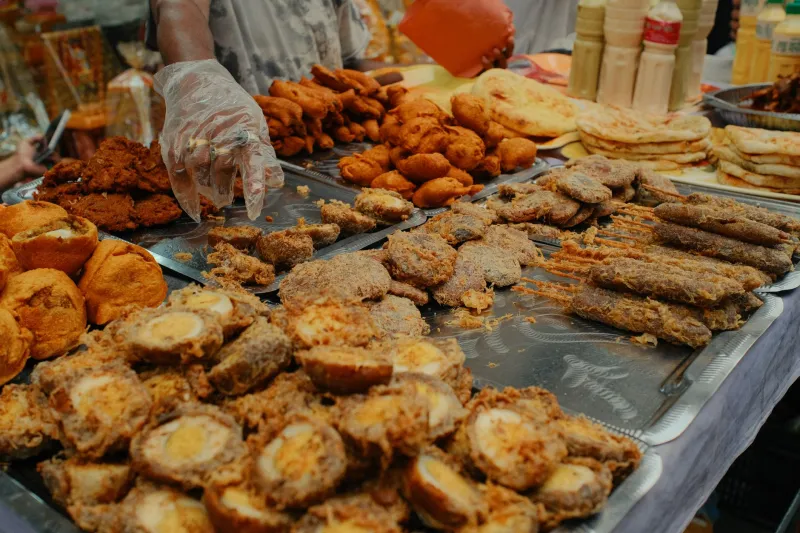
Thirty Years, One Chai: How Dhaka's Snack Vendors Out-Stubborned American Inflation
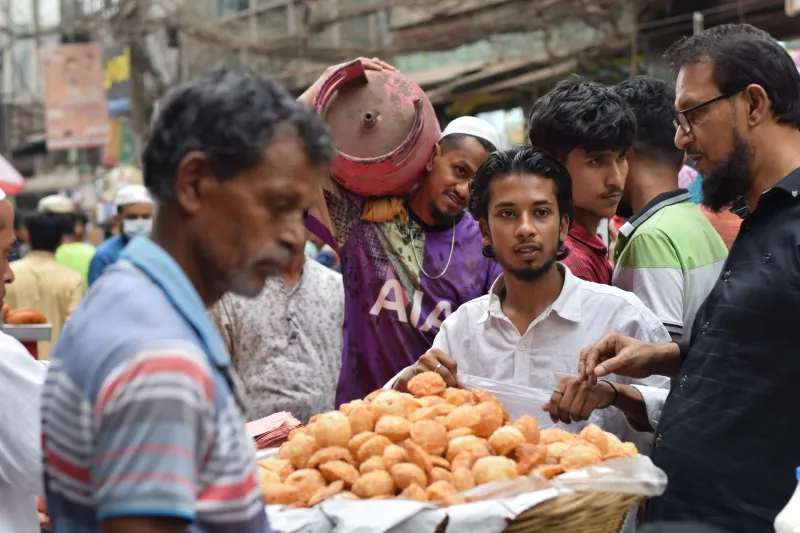
Picture this: it's 1995. In America, Toy Story just hit theaters, a hot dog from a Manhattan cart runs you about two bucks, and in Dhaka, a plate of fuchka from the cart outside your college gate costs you roughly two taka a piece.
Thirty years later, Toy Story has five sequels, that same New York hot dog will run you eight dollars — a 300% markup — and the fuchka guy? Five taka a piece. Six for the fancy ones with the extra spiced potato.
We at 70 Taka Bites got curious about this. Unhealthily curious. So we did the math, tracked down some veteran cart owners, and uncovered what might be the most quietly heroic pricing strategy in the food world.
The Receipts From Three Decades Ago
Let's set the scene with some numbers, adjusted to what they actually felt like at the time:
- Fuchka (per piece): ~2 taka in 1995 → ~5 taka today
- Puri (aloo puri, the good kind): ~5 taka → ~15 taka
- Milk tea (cha): ~3 taka → ~10 taka
- Jhalmuri (a full paper cone): ~5 taka → ~20 taka
Now here's the kicker. Adjusted for inflation, that 2-taka fuchka from 1995 should cost somewhere around 12–15 taka today if vendors had merely kept pace with the cost of living. They haven't. They've priced below inflation for thirty years running.
Meanwhile, across the Pacific: a movie theater popcorn went from about $3 to $9. A ballpark beer from $4 to $12. A New York slice from $1.50 to $5. American street food didn't just keep up with inflation — it lapped it, twice, and then charged extra for the view.
The 70-Taka Miracle, By the Numbers
Here's what this means in practice. In 1995, 70 taka was a serious sum for a student — enough for a full day of eating plus bus fare. Today, 70 taka gets you a fuchka feast, a puri or two, AND a cha to wash it down. The basket of joy that 70 taka buys has, shockingly, expanded over time while the equivalent $10 in America has shrunk to a sad combo meal with no upgrades.
We ran this by an economist friend. He stared at our spreadsheet for a long moment and said, "This is why nobody funds street food research." Then he confirmed our math. So it's official: Dhaka's snack carts are the only investment vehicle in history that beat inflation through pure stubbornness.
Meet the Men Who Refuse to Raise Prices
The economics only make sense when you meet the people behind them. Take Abdul Karim chacha, who has run his fuchka cart near TSC for 28 years. His tamarind water recipe hasn't changed since the mid-90s. Neither, roughly, has his pricing.
"If I raise the price, the students stop coming," he told us, gesturing at the crowd around his cart. "The students who come today are the sons and daughters of the students who came in 1998. What am I going to do, betray my own customers' children?"
That's not a business strategy. That's a legacy.
Then there's Ratan, who sells puris near a Mirpur bus stop. His trick is brutal efficiency: he knows exactly how much gas, oil, and flour go into a day's work, and he wastes nothing. "The big restaurants raise prices because they're paying for AC and waiters," he laughs. "My waiter is me. My AC is the breeze. My rent is this spot, and the spot doesn't charge."
The American Comparison Is Genuinely Unfair
We want to be fair to US vendors — rent, labor, and insurance costs there are genuinely crushing. But the contrast is still worth savoring for our American readers: in 1995, $5 in New York got you two hot dogs and a drink. Today it gets you one hot dog, and the vendor will judge your tip.
In Dhaka, the 1995 equivalent of 70 taka bought you dinner. Today's 70 taka buys you dinner, a snack, and tea, and the vendor will remember your order and ask about your exams.
One currency stayed loyal. The other discovered surge pricing.
Why This Actually Matters
It's easy to romanticize cheap street food, but there's something deeper here. These prices aren't accidents — they're a social contract. In a city where incomes vary wildly, a 5-taka fuchka is the same price for the rickshaw puller and the bank manager. The cart is one of the last truly democratic dining rooms in Dhaka.
And for the vendors themselves, holding the line is a point of pride. Raising prices, in their eyes, means the product got worse or the vendor got greedy. Neither is acceptable. So they tighten their own margins instead, year after year, decade after decade.
The Verdict
So the next time an American friend complains about an $8 hot dog — and they will, loudly — send them this article. Tell them about Karim chacha's cart, where the price has moved less in 30 years than the hot dog's price moves in a single summer.
Then tell them 70 taka still buys a feast. And watch their brain quietly stop working.
Got a favorite cart that's held its price since the 90s? Send us the location. We'll bring the taka and the tissues.