Two Hours, Burnt Fingers, Zero Resignations: My Undercover Shift-Work Tour of Dhaka's Snack Carts
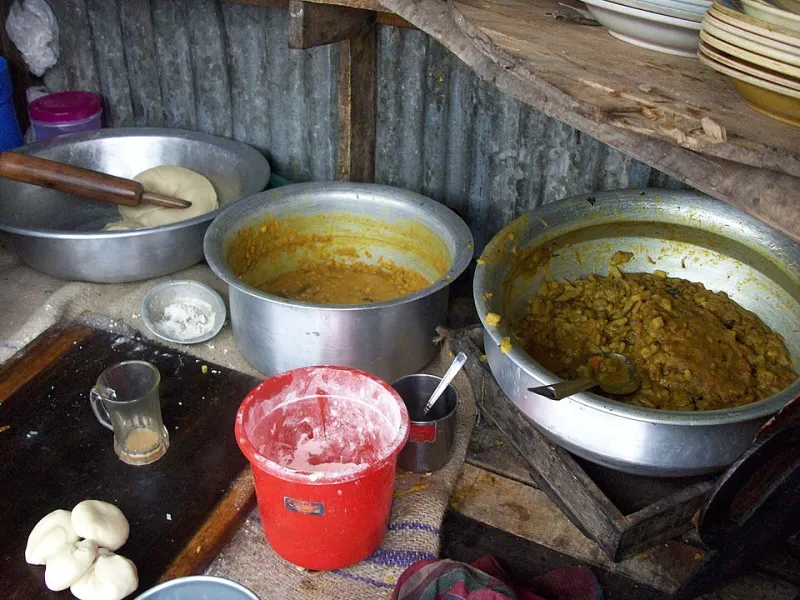
Photo: David Brewer from Brookmans Park, England, CC BY-SA 2.0, via Wikimedia Commons
If you've eaten at an American fast-food counter lately, chances are the person handing you the fries was on their second day. The restaurant industry in the US turns over roughly 130% of its workforce annually — meaning the average crew is functionally replaced, top to bottom, more than once a year. Meanwhile, here in Dhaka, I know of a fuchka cart in Dhanmondi whose head helper has been on the job since 1994. Same cart. Same boss. Same exact wrist motion for spooning tamarind water.
I needed to understand what was going on. So I did what any reasonable food blogger would do: I walked up to five different under-70-taka snack carts, lied about being useful, and asked for a shift.
Applicant #1: The Puri Cart That Runs on Trust
My first interview lasted eleven seconds. "Can you count change?" asked Rafiq bhai, proprietor of a puri operation near TSC. I said yes. "Then you're hired. Two hours. Don't touch the oil."
I touched the oil.
But here's what struck me in between yelping: Rafiq bhai's assistant, a soft-spoken guy named Sumon, has worked with him for nine years. Nine. In America, that's enough tenure to get your name on the wall at a bank, not a snack cart. When I asked Sumon why he'd stayed, he shrugged in a way that contained an entire economic thesis.
"He pays me every single day. He never counts the change I give back. And I eat here."
That's it. That's the whole retention package. No 401(k). No pizza parties. Just daily cash, zero micromanagement, and dinner.
The Tipping Trick Nobody Told Me About
Cart number two, a chotpoti stand in Mohammadpur, taught me the second pillar of the system: the tips don't go to the owner.
In US food service, tip pooling is a legal minefield with spreadsheets and lawsuits. On Dhaka's snack carts, it's simpler: whatever customers toss in the jar for the helper belongs to the helper, full stop. On a busy evening, Sumon's equivalent can pocket an extra 100–150 taka — real money when your base is this lean.
And the customers know this. There's a whole silent choreography where regulars deliberately overpay and wave off the change, nodding at the helper, not the boss. It's a payroll system funded entirely by social pressure and jhalmuri cravings. The IRS would weep.
The Meal-for-the-Help Clause
Every single cart had the same unwritten rule, and I only discovered it because I tried to buy my own lunch on break.
The owner at a muri-and-ghugni operation in Mirpur physically took the coins out of my hand. "You work here, you eat here," he said, like I'd suggested paying rent to my own mother. The helpers at all five carts eat one full meal per shift, made from the same stock as the paying customers' food — not leftovers, not scraps, the actual menu.
Run the math with me. A meal costs the vendor maybe 15–20 taka in ingredients. In exchange, the helper saves that money daily, feels genuinely valued, and — critically — tastes the product. Sumon can tell you which batch of tamarind water is off before a customer ever can. That's quality control you cannot hire a consultant for.
My Two-Hour Performance Review
For the record: I am terrible at this job.
Across five shifts, I under-filled exactly one puri, over-salted one ghugni, gave 40 taka in change for a 10 taka order (twice), and developed a permanent flinch around hot oil. At the fuchka cart, a customer patiently watched me assemble one, took a bite, and quietly asked the actual helper to remake it.
And yet nobody fired me. Because the economics of a 70-taka cart don't run on per-unit perfection — they run on the accumulated instincts of people who've done this for a decade. Sumon could portion fuchka filling in his sleep. The system isn't built to survive turnover; it's built to prevent it.
What the Carts Know That Applebee's Doesn't
American chains spend billions on hiring, onboarding, and re-hiring the same positions year after year. Dhaka's micro-vendors spend, as far as I can tell, one daily meal and a culture of not auditing the change jar.
Daily pay removes the anxiety that makes people job-hop. Autonomy removes the resentment. The meal removes the distance between owner and worker — everybody eats the same food, off the same cart, complaining about the same onions. It's not generous so much as it is obvious, which might be the most damning part.
I left my final shift with singed fingertips, a pocketful of miscounted taka, and a strange nostalgia for a job I'd held for two hours. Somewhere in Dhanmondi, Sumon was starting his evening shift, same as he has for nine years, not because he has to — but because nobody's ever given him a reason to leave.
Turns out the secret ingredient in Dhaka's 70-taka snacks isn't the tamarind. It's that the guy making them plans to be there tomorrow.