Eat the Calendar: A Month-by-Month Map of Dhaka's Cheapest, Best Bites
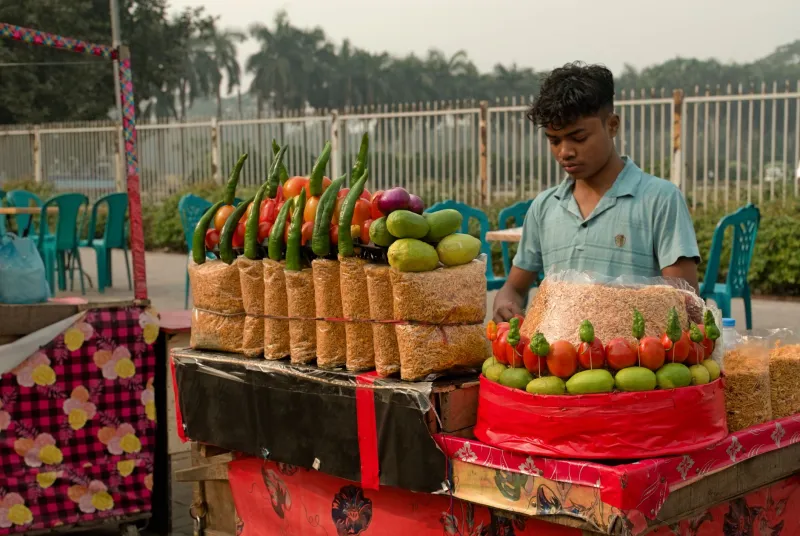
Americans have pumpkin spice season. Dhaka has pitha season, mango season, and a monsoon season where the correct response to the rain is a paper cone of spicy puffed rice eaten under a tarp while the streets turn into rivers. Guess which country is doing it better.
I spent a year mapping Dhaka's cheap-eat calendar — what peaks when, where to find it, and how much taka it'll cost you. Spoiler: never more than 70. Here's the full breakdown, written for my American friends who keep asking when they should visit. (Answer: whenever. But check this first.)
March to May: Summer, the Mango Presidency
Summer in Dhaka is brutal, humid, and — this is the part nobody tells you — the best time on earth to eat fruit. Not artisanal, farm-to-table fruit. Fruit from a cart, sold by weight, dirt cheap.
The headliner is the mango. From late April onward, roadside stalls stack Himsagar and Langra varieties like edible gold bars, and a serving that would cost you $8 at an American specialty grocer runs a fraction of 70 taka. The move: buy a bag, sit on a rooftop, eat until you question every Honeycrisp you've ever overpaid for.
Heat-beating honorable mentions:
- Aam panna carts — raw mango drink, tart, salty, basically nature's electrolyte beverage for pennies
- Doi from street-side shops — sweet yogurt in clay pots, and yes, the clay pot is part of the flavor
- Ice gola / shaved ice carts — syrup-drenched, hand-cranked, gloriously unsanitary-looking and delicious
June to September: Monsoon, the Jhalmuri Renaissance
Monsoon is Dhaka's moodiest season and, I'd argue, its most delicious. Rain changes the food economy. Fried things gain moral authority. And nothing — nothing — beats the monsoon snack king:
Jhalmuri. Puffed rice, mustard oil, raw onion, green chili, tamarind, a shake of lemon, tossed in a paper cone with theatrical speed. It costs 20 to 40 taka. It tastes like the concept of excitement. Eat it while rain hammers a tin roof and you will understand Dhaka better than any guidebook can teach you.
Rainy-day supporting cast:
- Puri with alur torkari — hot fried bread and potato curry from breakfast carts, best consumed while steam rises off wet pavement
- Bhapa pitha's cousin, the bhuna khichuri plate — some vendors sell hot khichuri during downpours, and it's basically edible rain gear
- Peyaju and beguni — fried onion and eggplant fritters that appear near tea stalls the second the sky darkens, like the city's collective immune response to bad weather
October to November: The In-Between, the Fuchka Prime
The rains taper, the heat softens, and Dhaka enters its most livable stretch. This is peak fuchka and chotpoti weather — crisp evenings, open-air carts doing brisk business, and every plate still under 50 taka.
This is also festival season. During Durga Puja and later Eid celebrations, street food density multiplies. My advice: pick a neighborhood, walk with no plan, and follow the crowds. The 70-taka ceiling has never been easier to honor.
December to February: Winter, the Pitha Dynasty
Winter is Dhaka's luxury season — and by luxury I mean it drops to a brisk 60°F, which locals treat like the Ice Age and which Americans will find hilariously pleasant. It's also when the city's best seasonal food tradition fires up:
Pitha stalls. Rice cakes, steamed or fried, stuffed with date molasses (khejur gur) and coconut. Bhapa pitha — steamed, dusted, served hot off a clay pot — is the single best 20 taka you will spend all year. Vendors set up at dusk. The smoke, the molasses, the cold air: it's Dhaka's version of a cozy fireplace, except tastier and cheaper.
Winter's greatest hits:
- Date molasses itself, sold fresh, eaten off a spoon when no one's watching
- Nagarpur and Chittagong-style pitha varieties at weekend markets
- Hot halim and jhali kabab from night carts — hearty, spiced, built for (mild) cold
The Meta-Lesson of the Calendar
Here's what a year of this taught me: Dhaka's cheap food isn't random. It's synchronized. The city eats what the weather demands, at prices the weather never seems to affect. Mangoes peak when you need them most. Fried snacks arrive with the rain. Pitha shows up when the air turns cool.
So if you're planning a visit — or just a Dhaka-based friend trying to convert you — pick a season, any season. The calendar is full, the ceiling is 70 taka, and your biggest risk is coming home and filing a formal complaint with your local salad chain.
Note for American readers: 70 taka is roughly 60 cents. Read that back through every paragraph above. You're welcome.