Jhalmuri, Chanachur, and Other Blue-Chip Assets: Inside Dhaka's Office Snack Economy

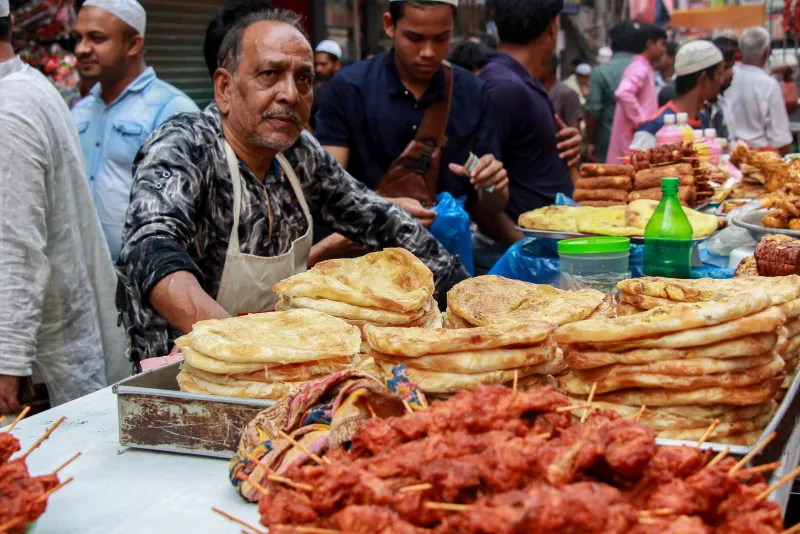
Somewhere in Motijheel, right now, a 24-year-old analyst is executing a trade more complex than anything on the Dhaka Stock Exchange. He's swapping half a packet of chanachur for two cups of cha, with a verbal futures contract on next Tuesday's jhalmuri delivery. No brokers. No fees. No regulation whatsoever. Welcome to the office canteen economy — the most efficient market in Bangladesh, and possibly the planet.
I spent one full week embedded with the snack traders of Dhaka's corporate floors, notebook in hand, chanachur dust on my fingers. What I found will make anyone who's ever paid $14 for a sad desk salad want to defect immediately.
The Reserve Currency Is Puffed Rice
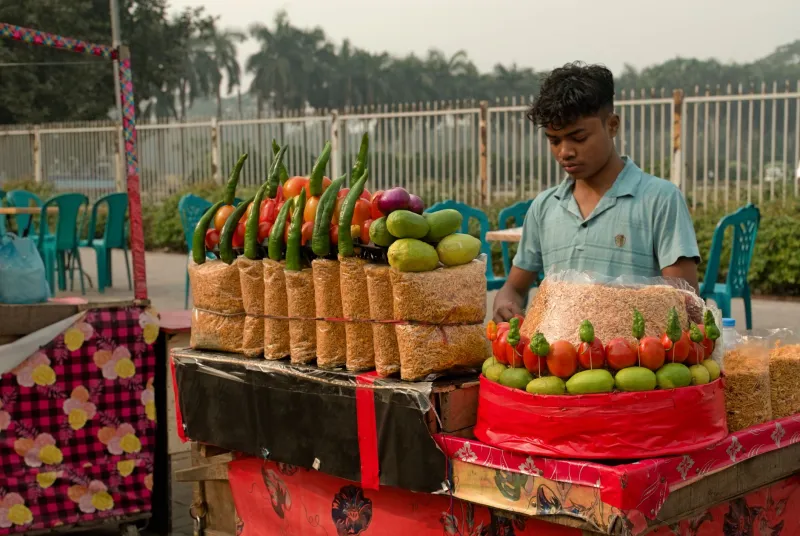
Every economy needs a baseline, and in the canteen markets of Dhaka, that baseline is jhalmuri. Roughly 20-30 taka a packet, universally desired, infinitely divisible. It's the gold standard, except tastier and with more raw onion.
The genius of jhalmuri as a financial instrument is its divisibility. A single packet can be split four ways without anyone feeling shortchanged, because the tamarind-to-muri ratio redistributes fairly if you shake the bag first. Try splitting a $13 Chipotle burrito four ways at your office and watch collegiality die in real time.
One trader — let's call him Rafi, because that's his name — explained his strategy to me over a shared packet at 4:47 PM, the market's peak trading hours. "Monday I buy two packets. One for now, one for leverage. By Wednesday, everyone owes me something."
That's not snacking. That's a macro strategy.
Diversification, But Make It Crispy
American finance bros preach diversification. Dhaka's canteen traders practice it, and their portfolios are beautiful:
- 30% jhalmuri — stable growth, high liquidity
- 25% chanachur — the spicy mid-cap, always in demand
- 20% tea biscuits — defensive asset, pairs with anything
- 15% cha (borrowed) — zero-cost position, repayable in kind
- 10% murki or jaggery sweets — the high-risk, high-reward speculative play
Total portfolio value: under 70 taka. Under one American dollar. Meanwhile, the average US office lunch delivery — before tip, before the "service fee," before the fee on the fee — runs north of $12. That's not lunch. That's a wealth transfer to a delivery app.
Liquidity: Why Chanachur Beats Cash
Here's where Dhaka's snack market genuinely embarrasses Wall Street: the assets are self-liquidating. A packet of chanachur never loses value sitting in your drawer — it gains value, because hunger compounds like interest. By 5 PM, that packet you bought at 2 is the most sought-after asset on the floor.
The borrowing economy is where it gets truly sophisticated. There's an unwritten ledger, maintained in no app, tracking every "bro, one piece?" across the office. Debts are honored with religious devotion. I watched a man repay a two-week-old biscuit loan with interest — a full extra biscuit — and the lender accepted it with the solemnity of a bond settlement.
Try floating an IOU for a slice of your coworker's $16 poke bowl in Manhattan. You'll be eating your business card.
ROI: The Numbers That Hurt American Feelings
Let's run the comparative analysis:
| Metric | Dhaka Snack Portfolio | US Office Lunch Run |
|---|---|---|
| Daily cost | ~$12.50 | |
| Social capital generated | Enormous | Negative (you ate alone at your desk) |
| Transaction fees | Zero | $3.99 "small order fee" |
| Flavor volatility | Delightfully spicy | Microwave-dependent |
| Afternoon crash | Managed via cha hedging | Inevitable |
The ROI on a 70-taka portfolio isn't measured in money. It's measured in the colleague who saves you a seat, the manager who shares her muri, the invisible network of goodwill that a shared packet builds. You cannot buy that in America. You can buy it in Dhaka, for less than the cost of a single airport water bottle.
The Crash of '19 (A Cautionary Tale)
Every market has its risks. One trader I'll call Tanvir over-leveraged on a Friday — borrowed across three departments against a rumored shipment of special badam chanachur that never materialized. By Monday he owed biscuits to eleven people.
He recovered, as all great traders do, by cornering the tea market: buying a full box of cha patti and brewing for the whole floor for a week. Debt cleared, reputation restored, legend status achieved.
Final Ticker: Buy
Strong buy on jhalmuri. Hold chanachur long-term. Cha remains the only true hedge against a bad meeting. And if anyone tells you a $12 lunch is normal — show them a man in Gulshan who turned 70 taka and a packet of puffed rice into a network of friends, favors, and free snacks stretching across an entire office building.
The market never sleeps. But it does get hungry around 4:30.