The 70-Taka Gym Bro: One Week of Post-Workout Street Food in Dhaka
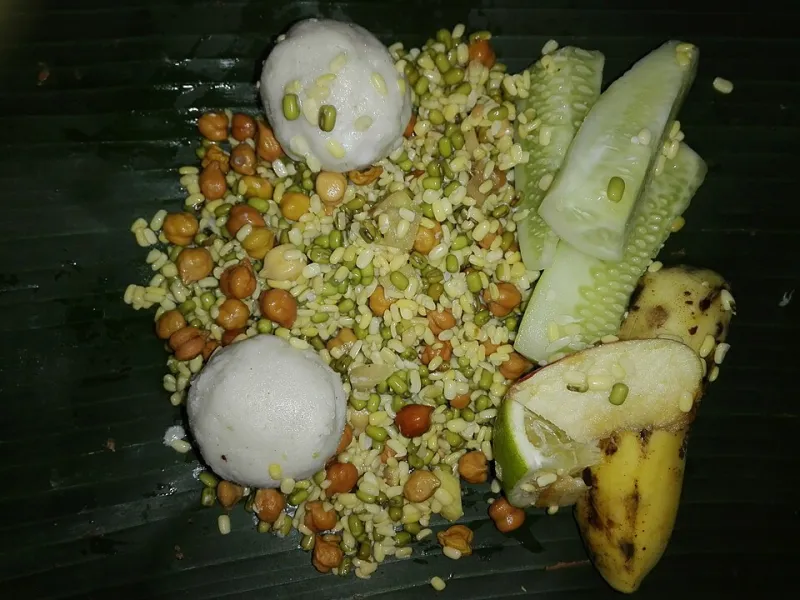
Photo: Nayan j Nath, CC BY-SA 4.0, via Wikimedia Commons
I am not a nutrition scientist. I am a person who once paid $15 for a smoothie that contained spinach and regret. So when I started working out in Dhaka, I decided to run a completely unscientific experiment: for one week, every post-workout meal had to come from a street cart and cost 70 taka or less. No protein bars. No branded recovery drinks. No $15 smoothie with a hemp seed garnish. Just the city, a sweating writer, and whatever the cart owners were willing to sell me.
The rules
Five workouts in seven days: three runs, two bodyweight sessions. Immediately after each workout, I ate street food under 70 taka. I tracked cost, what I ate, and how I felt. I did not track macros, because the cart owner did not have a spreadsheet and neither did I. This is not a diet plan. It is a value experiment.
Monday: banana and chana after a 5K (20 taka)
This is the classic. Sliced banana, roasted chickpeas, a little chili powder, maybe jaggery if the cart is feeling generous. I ate it standing on the corner, still breathing hard, and felt like a person who had solved a small problem. Cost: 20 taka, about 17 cents. In the US, a banana is 50 cents and a protein bar is $2.50, and neither one has ever made me feel like I beat the system. The banana-and-chana stop is the quiet genius of Dhaka post-workout eating. It is fast, it is cheap, and it does not pretend to be a lifestyle brand.
Tuesday: boiled egg and dal (40 taka)
After a bodyweight session, I went for a bowl of musur dal and a boiled egg from a cart near the market. The dal was hot, the egg was cold, and the combination was weirdly perfect. Cost: 40 taka, about 33 cents. In the US, an egg white wrap is $8 and comes with a side of moral superiority. Here, it is a breakfast that also works as lunch, dinner, or a post-workout decision you do not have to think about.
Wednesday: chicken broth and roti (70 taka)
The most expensive day. A clear peppery chicken broth with ginger and coriander, plus one roti. I ate it after the gym, sitting on a low wall, and felt like I had earned something. Cost: 70 taka, about 58 cents. A cup of bone broth in America is $9. This was better, and I did not have to listen to a podcast about it.
Thursday: chotpoti (50 taka)
Chickpeas, potato, tamarind, cumin, chili, a little egg on top. Not the most protein-dense meal in the world, but it was hot, filling, and cost 50 taka — about 42 cents. A chickpea bowl in the US is $12. I am not saying chotpoti is a recovery shake. I am saying it is a better use of $12 than most things sold as recovery shakes.
Friday: yogurt and banana (40 taka)
After an easy run, I found a cart selling thick yogurt with banana. It was cold, tangy, and exactly what I wanted. Cost: 40 taka, about 33 cents. A Greek yogurt cup in the US is $6. I have never enjoyed a Greek yogurt cup as much as this.
Saturday: singara and chai (30 taka)
This was not a nutritional triumph. It was two singaras and a small chai, eaten after a short workout, because I am a human being and not a macro-counting robot. Cost: 30 taka, about 25 cents. In the US, a pastry and a coffee is $8. Here, it is a small ceremony.
Sunday: jhalmuri and a boiled egg (40 taka)
Puffed rice, chanachur, onion, chili, lemon, and one boiled egg from the next cart over. Cost: 40 taka, about 33 cents. It was crunchy, spicy, and completely unserious. I felt fine. I felt fed.
The receipts
Total spent on post-workout food for the week: 290 taka, about $2.40. A typical American version — protein bars, smoothies, a bone broth, a chickpea bowl — would easily clear $40. I am not saying the Dhaka carts are optimized for hypertrophy. I am saying they are optimized for something else: value, convenience, and the quiet intelligence of a city that has been feeding working people for a very long time.
What the gym bros get wrong
The $15 smoothie is not a meal. It is a subscription to a feeling. The banana-and-chana cart is a meal, and it costs 17 cents. If you are lucky, the cart owner remembers your order after two days. That is not a nutrition label. That is hospitality. And it is a lot cheaper than a protein bar.