Skip the $12 Green Juice: A Dhaka Street-Food Resolution That Actually Fits Your Budget

Photo by Photo by Radowan Nakif Rehan on Unsplash on Unsplash
The Wellness Aisle Is a Theme Park
Every January, the American grocery store turns into a wellness theme park. There is a $12 green juice that tastes like a lawn mower and a $15 grain bowl that promises ancient grains but delivers lukewarm quinoa. There are powders for energy, powders for sleep, and powders for people who have not yet realized that most of their problems are solved by drinking water and going to bed.
I am not against vegetables. I am against the idea that eating well requires a financing plan. Dhaka's street-food economy offers a useful correction. A 70-taka plate is roughly 60 cents. It is not a wellness product. It is lunch. And lunch, done with a little thought, can be more nourishing than a $12 juice that has been Instagrammed within an inch of its life.
This is not a diet post. It is not a claim that street food is automatically healthy. It is an argument for separating flavor and nourishment from expensive labels.
What 70 Taka Actually Buys in Dhaka
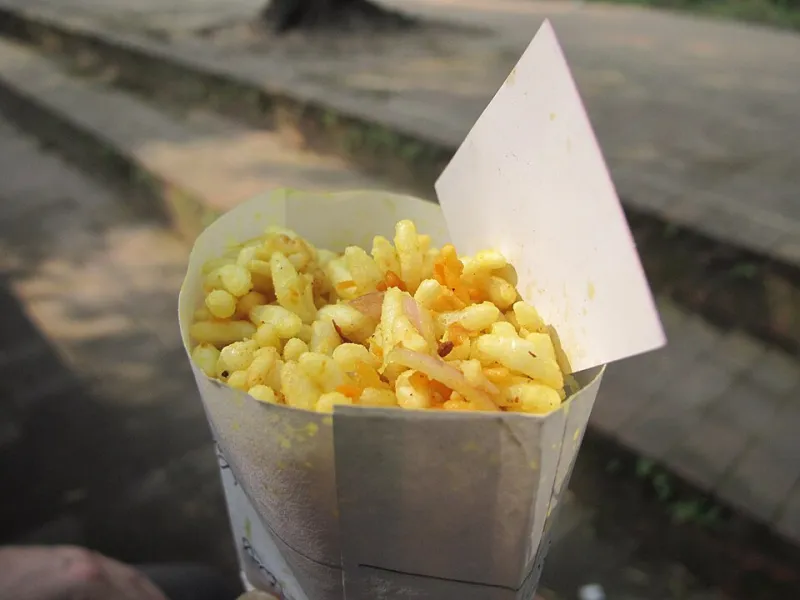
Seventy taka can buy two singaras and a chai. It can buy a plate of jhalmuri with onion, lime, and spice. It can buy chotpoti, muri, dal puri, or a vegetable-heavy plate depending on the cart and the neighborhood. It cannot buy a $12 green juice, but it can buy a lot of things that taste better and keep you full longer.
The comparison is not perfect. Dhaka cart food varies. Hygiene varies. Nutrition varies. A fried snack is still a fried snack. But the American wellness market has its own blind spots: expensive juices with almost no fiber, grain bowls with more packaging than protein, and supplements that cost more than a week of actual groceries.
A 70-taka plate forces a useful question: what am I actually paying for? Flavor? Convenience? Fiber? Protein? A feeling? If the answer is a feeling, fine. Just know that the feeling is expensive and usually wears off by 10 a.m.
A Seven-Day, 70-Taka-ish Meal Sketch
This is a sketch, not a prescription. Prices move. Portions vary. Use it as a framework for eating with flavor on a small budget, not as a medical plan.
- Monday: Two vegetable singaras and a chai. Roughly 70 taka. Crispy, warm, and enough to get you to the next meal.
- Tuesday: A plate of jhalmuri with extra onion and lime. Roughly 70 taka. Crunch, acid, heat, and a surprising amount of volume.
- Wednesday: Chotpoti with chickpeas and potato. Roughly 70 taka. Fiber, spice, and a reason to carry napkins.
- Thursday: Dal puri or a vegetable roll. Roughly 60 to 70 taka. Starchy, filling, and portable.
- Friday: Muri mixed with chanachur and fresh onion. Roughly 70 taka. The snack that eats like a meal.
- Saturday: A vegetable khichuri plate from a trusted cart. Roughly 70 taka. Warm, soft, and comforting.
- Sunday: Two piyaju and a small chai. Roughly 70 taka. Not a nutrition lecture. Just a good Sunday.
Add fruit from a market when you can. Drink water. Eat a vegetable that is not fried once in a while. The point is not to romanticize limitation. The point is to show that a week of flavorful food can cost less than one $12 juice and one $15 grain bowl.
The $12 Green Juice vs. the 70-Taka Plate
The green juice costs $12. It has a nice label. It may have vitamins. It probably has less fiber than an apple. The grain bowl costs $15. It has roasted vegetables and a sauce that tastes like tahini met a spreadsheet. Both are fine occasionally. Neither is a moral achievement.
A 70-taka plate costs about 60 cents. It comes with crunch, spice, and a vendor who remembers your order. It is not a wellness brand. It is food. And for a lot of people, that is the whole point.
The American wellness conversation often confuses price with virtue. If it costs more, it must be better for you. If it comes in a glass bottle, it must be cleaner. If a influencer with a ring light says it, it must be true. Dhaka's cart economy does not have that problem. The fuchka vendor is not selling you a lifestyle. He is selling you fuchka. You eat it and go back to work.
My Resolution Framework (No Blender Required)
1. Pick a 70-taka anchor. Find two or three cart meals you genuinely like and know are prepared safely. Rotate them. Do not pretend you will suddenly become a person who meal-preps seven containers on Sunday. You will not.
2. Add one cheap vegetable. Cucumber, tomato, carrot, whatever is in season. A 20-taka cucumber with lime and salt is not a grain bowl, but it is fiber and it tastes good.
3. Keep a water bottle. Hydration is not a $40 electrolyte subscription. It is water. In a bottle. That you refill.
4. Allow one expensive thing. A $12 juice is not evil. It is just not a daily habit. Buy it if you want it. Enjoy it. Then go back to the 70-taka lunch that actually fills you up.
5. Ignore the label tax. You do not need a wellness brand to eat a vegetable. You need a vegetable.
The Point Isn't Being Cheap. It's Being Full.
The American wellness machine sells optimization. Dhaka's cart economy sells lunch. One is a lifestyle. The other is a plate of food that costs 70 taka and does the job.
My resolution for the coming year is not to spend more on health. It is to spend less on the performance of health. Eat more flavor. Eat more vegetables. Eat enough. Save the $12 for something that actually makes your week better, like a good book, a train ticket, or eleven plates of fuchka.
That is a resolution I can keep past the second week of January. No blender required.